
Legal Answering Service for Ontario Firms: Intake Fields, a Never-Say List, and Where It Stops
By Right On Call ·
A law firm’s missed call is usually a prospective client comparing firms, and the one who reaches a person first often books first. An answering service can catch that call. It can also say something on the firm’s behalf that nobody at the firm would say. This guide lists the intake fields we would set up, the lines the receptionist must never say, and where it hands off.
Two callers, two next steps
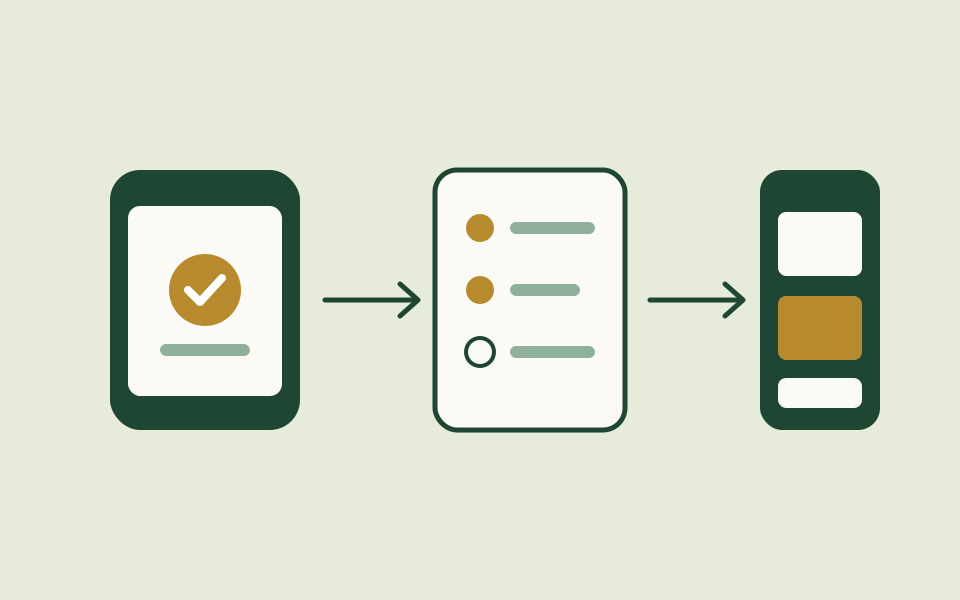
A prospective client is offered a consultation on your live calendar. An existing client is texted to your team with their name, number, and reason, and told someone will call back. The receptionist does not put either caller through to a lawyer while they wait. That is a callback, not a transfer.
It cannot see client files, matter details, or your practice-management system, and it gives no legal advice. It answers in English or French, whichever the caller starts in, and says it is an AI assistant whenever a caller asks.
Intake fields, kept short until you have checked conflicts
The script asks for what your intake lawyer needs to decide whether to call back, and no more. A caller who starts telling the full story is thanked and told the lawyer will go through it on the consultation. You choose the fields at setup; this is the list we start from.
- Caller’s name and a callback number.
- New or existing client.
- The kind of matter, from the practice areas you take (for example family, real estate, wills and estates, employment).
- The names of the other people or businesses involved, so your team can run a conflict check before the consultation.
- A one-line description in the caller’s own words.
- Any date the caller already knows is coming, such as a court date or a closing, recorded as they said it and flagged to your team.
- The times that suit them for a consultation.
The never-say list
These go into the script as hard rules. They are script rules rather than code, which is why we test them on a private line before the receptionist answers a real call and keep tuning on your real calls after launch.
- Never says whether the caller has a case, or how strong it is.
- Never says the firm will take the matter or act for the caller. Only the firm decides that.
- Never quotes a fee, a retainer, or that a consultation is free, unless you have given us that exact line to read.
- Never states a limitation period or deadline, or says the caller has time.
- Never tells the caller what to do in the meantime: whether to sign, pay, reply, call the police, or post anything.
- Never says whether a person is or was a client of the firm.
- Never describes the call as privileged or confidential in a legal sense.
- Never claims to be a lawyer, a paralegal, or a person.
Where the details land
The consultation books into Cal.com or Calendly against your real open times. Every call is logged on your dashboard with its transcript and a short summary, and the caller’s details can go into Zoho CRM if you use it.
Clio or another practice-management system is scoped per account and quoted before we start: one adapter is included on the Managed plan and a build beyond that is priced separately.
Have your counsel check the script
Your professional obligations, including conflicts, what counts as a consultation, when a solicitor-client relationship begins, and what a non-lawyer may say on the firm’s behalf, are yours to set and not ours to advise on. None of this guide is legal advice. Have your counsel, or whoever at the firm handles professional-responsibility questions, check the intake fields and the never-say list before the line takes a call.
Our default handling is PIPEDA-aligned. Recordings are deleted about 14 days after the call on the standard plan, and transcripts and call records are kept 12 months, then anonymised. Several of our vendors process data in the United States, and the security page lists each one and its region. A firm that needs tighter retention or an extra vendor review gets that as a separately priced engagement.
What we have and have not done
No law firm has taken a call on Right On Call yet, so we have no results to quote. The intake fields and never-say list above are what we would build into your script during setup, not a product already running at another firm.
A legal answering service should book the prospect, pass the existing client to your team, take only what a conflict check needs, and keep to a list of things it never says. Write that list with us, then have your own counsel sign off on it before the first call.
Ready to stop missing calls?
Get a free missed-call audit and see exactly what an AI receptionist would catch for your business.