
When a Caller Asks for a Person: How Handoff Actually Works
By Right On Call ·
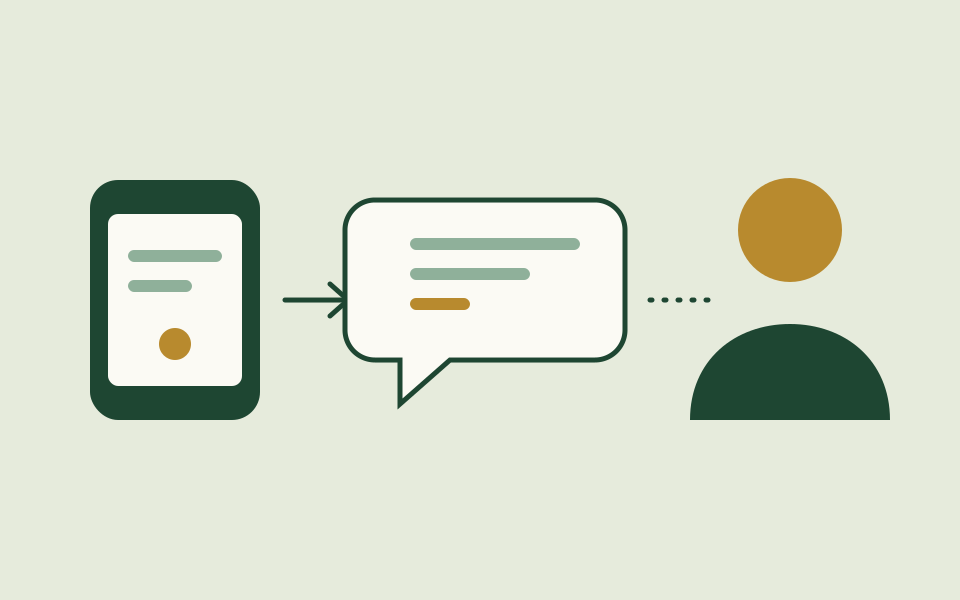
Every AI phone agent has an answer for the caller who says “let me talk to someone”. The honest answer has limits, and they are worth stating before you buy. Here is what happens, in order, and which parts are live.
The text goes first, every time
When a caller asks for a person, or the call needs one, the receptionist takes their details and texts your on-call number with their name, their number, and the reason. This happens on every escalation, including on a business where live transfer is turned on. Then it tells the caller the team has their details and will call back.
Live transfer to one number you choose
Live transfer puts the caller through to one number you choose. We switch it on for a business that asks for it, and it runs on one of our voice pipelines.
Where it is on, it applies to two cases: a safety emergency, after the safety script, and a caller who asks for a person. The text goes out first. The caller holds while an AI checks that a live person answered and will take the call. If it reaches voicemail, no answer, or a no, the caller returns to the receptionist, who confirms a callback. It never leaves a voicemail. It tries once per call, at any hour.
What it will not promise
It does not promise a caller will reach a person. The team may not be free. Every other escalation, such as a price question or an upset caller who did not ask for anyone, stays a text and a callback.
What you can read afterward
Each finished call gets a short summary written from the transcript and the facts the tools recorded. Calls that may be worth your attention carry a flag, such as a callback request or a safety escalation, and an AI read that suggests whether a person should listen.
Both are best-effort and can be wrong. They are a second opinion, not a grade, and nobody reviews every call unless you do. There is no live transcript during a call. You read it on the dashboard afterward.
What it passes to you instead of answering
A caller asking “is my part in?” gets their name and number taken and a callback from your team, because the receptionist cannot see job status. A reschedule books the new visit and texts you to cancel the old one, because it never cancels an appointment by itself. A request for a repair price goes to a person too.
Every escalation starts with a text to your on-call phone carrying the caller’s name, number, and reason, followed by a callback. Live transfer is a switch we turn on for a business that wants it. Anyone who tells you every caller reaches a human is promising more than a phone line can deliver.
Ready to stop missing calls?
Get a free missed-call audit and see exactly what an AI receptionist would catch for your business.
Get a Free Missed Call Audit