
Burst Pipe or Dripping Tap? How a Receptionist Decides What Counts as an Emergency
By Right On Call ·
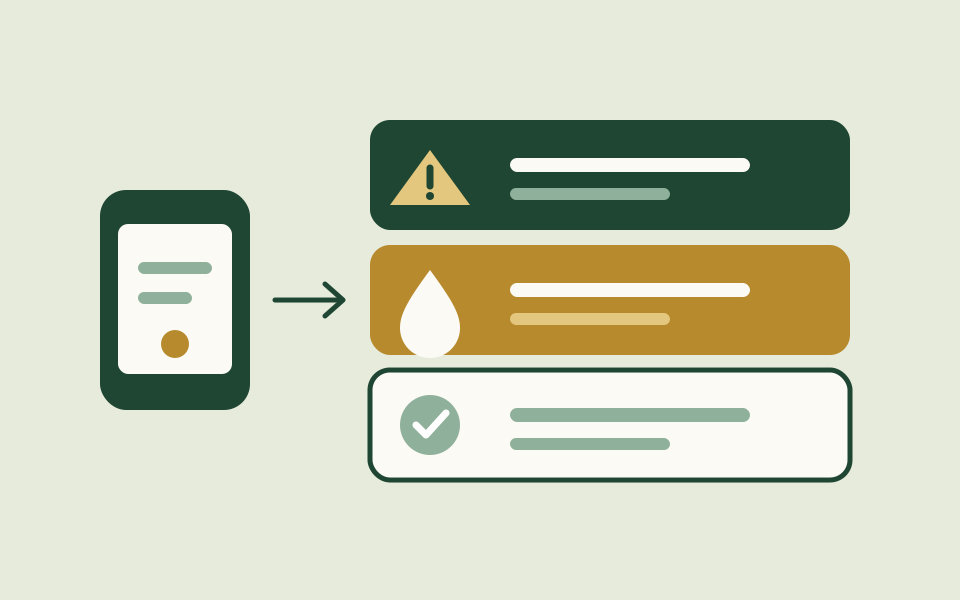
Triage has two ways to go wrong. If everything is an emergency, your on-call tech is woken for a dripping tap. If nothing is, the burst pipe waits for a callback. A receptionist needs a rule it applies the same way at 2 PM and 2 AM, and the rule should live somewhere a prompt edit cannot quietly loosen.
Three outcomes, not a scale of ten
Every call lands in one of three levels. A safety call stops normal booking. An urgent call goes to the front of the line. A standard call books the next suitable slot. Fewer levels means fewer arguments about the edge cases and an on-call text that means the same thing every time.
Safety calls stop the booking
A gas smell, sparking, smoke, a burning smell, or an electric shock changes the call at once, wherever it comes up. The receptionist tells the caller to stop using the item and, if they smell gas and it is safe, to leave the area and call the gas utility or 911 from outside. It takes a callback number and flags the call so your team phones back right away.
It gives no other safety advice. It does not keep diagnosing and it does not book a normal visit. It does not delay the flag to collect a name. Where a business has live transfer switched on, a transfer attempt can follow the script. It never replaces it.
Urgent calls go to the front of the line
The urgent signals are an active leak, food that is spoiling, no heat in cold weather, and no cooling in hot weather. An urgent call is offered the soonest slot the calendar actually has, and your on-call number is texted with the details.
Urgent does not mean an arrival time. The receptionist cannot promise a technician within the hour, and if you have set a minimum lead time for a job type, urgency does not shorten it. In that case it books the earliest allowed slot and texts the shop to call the customer if you can get there sooner.
Why the rule lives in code
The same signals always produce the same level. That matters for dispatch and for the numbers you read later. The conversation model reports what it heard, and a separate check also scans the caller’s own words for safety phrases as a backstop.
That backstop is deliberately broad. A false alarm costs a careful script and a callback. A missed gas smell costs far more, so the check leans toward catching.
Your list is part of it
What counts as urgent for your shop is written at setup from your rules: no cooling in a house with a newborn, water on the floor, a walk-in cooler down. The rest books as routine. If your rules change, tell us and the list changes with them.
What it will not do
It does not diagnose the cause, say whether it is safe to keep running a furnace, or quote a repair price. The only fee it states is your service-call fee. Those answers belong to your technician.
A good triage rule is boring. Three levels, the same answer every time, and a text that tells your on-call person which kind of night it is. Ask any vendor where the rule is enforced. If the answer is only “in the prompt”, it can drift.
Where this applies
Ready to stop missing calls?
Get a free missed-call audit and see exactly what an AI receptionist would catch for your business.
Get a Free Missed Call Audit